Malta has secured the backing of EU Member States for the extension of a derogation that would allow its hydrogen-ready pipeline project to remain recognised as a Project of Common Interest (PCI) and continue to be eligible for potential EU funding.
EU Energy Ministers met on Friday in Luxembourg, where the Council of the European Union reached a General Approach on the revision of the Trans-European Networks for Energy Regulation.
The Council’s position will now proceed to trialogue negotiations with the European Commission and the European Parliament before the final text is adopted.
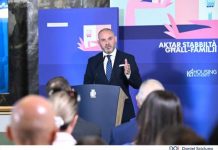
“This is an important step forward for Malta, reflecting our country’s geographic realities while remaining aligned with the Government’s long-term strategy to decarbonise the power sector by 2050. We have secured the Council’s support for the continued eligibility of the hydrogen-ready pipeline project for potential EU funding, thanks to the entire Maltese team who worked for this position. This keeps open Malta’s future access to the EU hydrogen backbone and the developing hydrogen market,” Minister Miriam Dalli said.
Following its introduction in 2021, this derogation has been instrumental in ensuring that Malta’s hydrogen-ready pipeline project maintains PCI status in the 2023 and 2025 Union Lists of projects. It also safeguards the project’s eligibility for EU funding under the Connecting Europe Facility.
The proposed extension of the derogation was supported on the basis that Malta and Cyprus remain physically isolated from the trans-European gas network and the future hydrogen backbone. Arguments in favour of the geographic realities of small island Member States were accepted by EU delegations, which agreed that a pipeline interconnection for these two island Member States remains an important objective for the Union.
The Council position also reflects the understanding that the implementation of such pipeline interconnections should not delay the decarbonisation of the economy or the deployment of clean energy sources and their related infrastructure.
During the same Council meeting, EU delegations adopted a General Approach on a Directive aimed at speeding up renewable energy permitting timelines. Energy Ministers also exchanged views on how best to meet the EU’s post-2030 energy objectives and coordinated their response measures in view of geopolitical tensions in the Middle East.