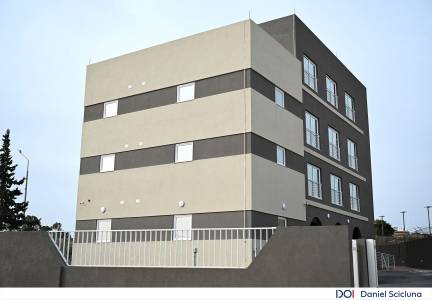
The Recovery and Resilience Facility (RRF), an instrument under NextGenerationEU, continues to support transformative investments that help EU Member States build more sustainable, resilient, and future-ready economies, particularly in view of the green and digital transitions.
As part of Malta’s Recovery and Resilience Plan (RRP), this investment is specifically aimed at improving energy efficiency within the public sector by reducing energy demand, lowering carbon emissions, and limiting energy waste through the refurbishment and retrofitting of public buildings.
This investment targets the renovation of at least 9,232 square meters of public sector buildings, with works designed to achieve a minimum reduction of 30% in primary energy demand. Through these interventions, public infrastructure is being modernized to higher energy performance standards, contributing directly to national and European climate objectives.
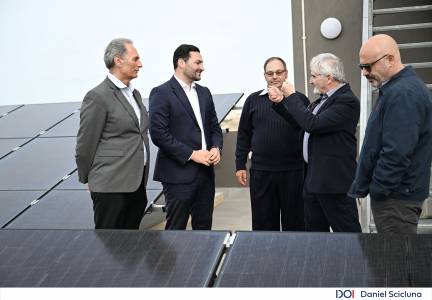
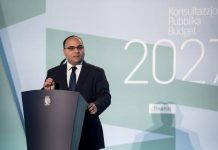
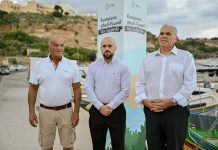
Parliamentary Secretary for Public Works Omar Farrugia said that the Public Works Department “is at the forefront not only of modernizing its facilities but also of ensuring sustainability and improving the environment around us.” He added that this clearly demonstrates how Malta Vision 2050, announced just a few days ago, is already beginning to be implemented, as this significant investment is directly linked to the pillar of Sustainable Economic Growth.
From his end, Architect Alexander Cutajar explained that the project was designed to make the building energy-efficient, and therefore included the installation of photovoltaic panels, double-glazed windows, as well as a water reservoir that allows stored water to be reused. In addition, a safer working environment has been created, which will be enjoyed by the employees who work there daily.
The works carried out under this investment included a comprehensive package of energy-efficiency measures designed to maximize performance and sustainability. These interventions comprised the replacement of outdated air-conditioning systems with more energy-efficient alternatives, the installation of roof and wall insulation to reduce heat loss and gain, the application of reflective paint to improve thermal performance, the upgrading of apertures with double-glazed systems, and the installation of photovoltaic (PV) panels to generate clean, renewable energy on site.
The refurbishment of 10 public buildings is being carried out under this RRP investment. To date, works have been successfully completed on six buildings, while the remaining projects are at various stages of implementation and are linked to Measure 68 and Measure 70 of Malta Vision 2050. The primary objective of these measures is to reduce emissions and to strengthen Malta’s share of renewable energy through the diversification of renewable energy sources, including the installation of photovoltaic systems.
These upgrades not only deliver measurable environmental benefits through reduced emissions and energy consumption, but also improve the functionality, comfort, and long-term sustainability of public buildings for employees and service users alike.
The Government remains committed to maximizing the impact of EU-funded investments, ensuring that public infrastructure plays a leading role in Malta’s transition towards a greener, more energy-efficient, and resilient future.