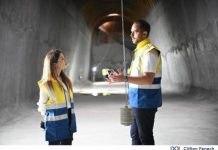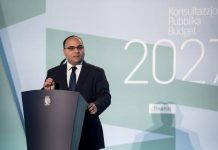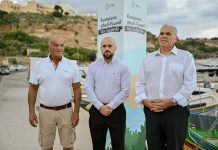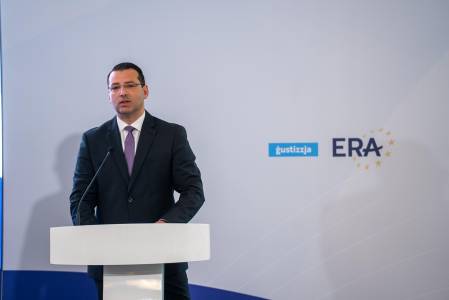
A high-level seminar focusing on the European Union legal framework and best practices for managing construction and demolition waste was successfully held, bringing together members of the judiciary, legal practitioners, and professionals from the construction and environmental sectors.
Addressing the conference, the Minister for Justice emphasized the importance of aligning legal principles with practical implementation in a sector that remains central to Malta’s economic development but is aligned with the sustainable priorities of the country.
The Minister highlighted that construction and demolition waste represents one of the largest waste streams in the European Union, with direct implications for environmental sustainability, land use, and public health. He stressed that for Malta responsible growth must remain a national priority.
Dr Attard also referred to Malta’s long-term strategic objectives under Malta Vision 2050, specifically macro measure 29 and 30, which place sustainability, efficient land use, and circular economy principles at the core of future development. Reducing demolition, increasing material reuse, and improving construction standards were highlighted as key priorities.
Participants explored key aspects of EU waste law, including the Waste Framework Directive, the waste hierarchy, regulatory obligations, and relevant case law of the Court of Justice of the European Union. Practical tools such as the EU Construction and Demolition Waste Management Protocol, pre-demolition audits, and waste management planning were also examined as essential mechanisms to bridge the gap between legislation and implementation.
A dedicated session focused on Malta’s national framework, highlighting the importance of consistent enforcement and clear regulatory guidance for industry stakeholders. The seminar also included an interactive case study based on a Maltese scenario, allowing participants to apply legal principles in a practical context and engage in structured discussion.
Reaffirming the Government’s commitment to sustainable construction and improved waste management, the Minister stressed that meaningful progress depends on coordinated action across institutions and sectors. He encouraged continued dialogue and knowledge-sharing to support better legislation, stronger enforcement, and informed decision-making.
“Malta’s progress in environmental stewardship and sustainable development depends on continued collaboration between policymakers, regulators, and practitioners,” concluded Dr. Attard.
The seminar, organized by the Academy of European Law in cooperation with the Ministry for Justice and the Reform of the Construction Sector, and with the support of the Environment and Resources Authority, formed part of ongoing efforts to strengthen expertise within the legal and regulatory community in complex and evolving fields.
The seminar featured a distinguished panel of local and international experts who led discussions throughout the day. Contributions were delivered by Dr Luísa Cortat, Deputy Head of the European Public Law Section at the Academy of European Law Trier; Aimee Brincat, Director responsible for Regulatory Affairs at the Environment and Resources Authority; Georgesam Mizzi, Senior Officer within the Waste Management Team at Environment and Resources Authority; Christina Olsen Lundh, Senior Judge and Associate Professor of Environmental Law in Sweden; and Vojtěch Vomáčka, Legal Advisor at the Supreme Administrative Court of the Czech Republic and Associate Professor at Masaryk University.
Among those present for the seminar were the Permanent Secretary within the Ministry for Justice and the Reform of the Construction Sector, Johan Galea and State Advocate Dr. Christopher Soler.
Photo: MJR