WasteServ’s new organic processing plant will more than double the country’s capacity to treat organic waste, further strengthening Malta’s circular economy.
The new facility forms part of a €75 million investment, with an estimated €45 million co‑financed through European Funds. It has been designed to respond to the continued growth in organic waste separation, which reached a record of around 36 million kilogrammes in 2025.
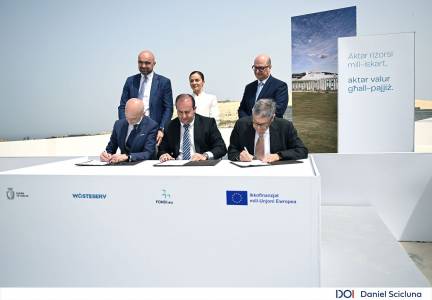
The project was formally launched during a signing ceremony attended by Minister for the Environment Miriam Dalli, Minister for European Funds Stefan Zrinzo Azzopardi, and WasteServ CEO Richard Bilocca, marking the start of works on this important national project.
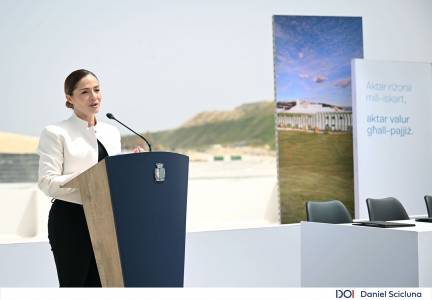
Minister Miriam Dalli stated, “The new facility will be a key piece of Malta’s national waste infrastructure. By significantly increasing processing capacity, the new plant will complement the ongoing waste separation efforts of households and businesses. It will play a central role in strengthening Malta’s circular economy, while also expanding the country’s use of renewable energy.”
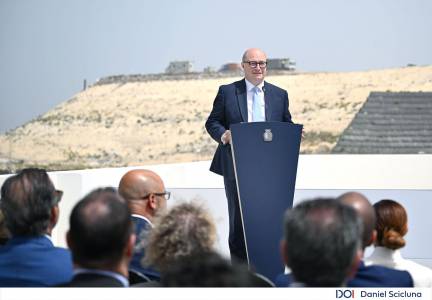
Minister Stefan Zrinzo Azzopardi said the project represents a very effective use of EU funding where it matters most. “Through this investment, we are investing in a better future and improved environmental health, while at the same time creating a renewable source of clean electricity that benefits both our communities and the environment.”
At full capacity, the new organic processing plant will significantly enhance WasteServ’s ability to treat organic waste, increasing annual processing capacity from around 36,000 to over 74,000 tonnes. This additional capacity will enable more organic waste to be converted into clean energy, with renewable electricity generation rising from 8.5 GWh to up to 20 GWh compared to the existing facility.
Like the current plant, the new facility will enable organic waste to be recovered as renewable energy and compost. However, it has been specifically designed to maximise efficiency through modern technology and automation.
Explaining this, WasteServ CEO Richard Bilocca said, “This will be a modern, future‑ready plant designed to adapt to changing needs. By maximising efficiency through modern technology and automation, the facility will recover organic waste as renewable energy and compost within a single, integrated operation, while also improving operational efficiency, enhancing worker safety, and delivering higher environmental performance. Throughout the process, waste will never come into contact with ambient air and will only leave the plant once fully processed and packaged into market‑ready compost bags.”
Once organic waste is delivered to the facility, bags are opened, and the material is screened to separate organic waste from contaminants such as plastics. The organic material is then treated in enclosed anaerobic digesters, where it naturally breaks down in the absence of oxygen, producing biogas, a renewable energy source used to generate electricity.
The remaining material, known as digestate, is pasteurised at high temperatures and further processed into high‑quality compost. The new facility will also allow compost to be packaged on site, ready for use.
The new organic processing plant marks a significant step forward in WasteServ’s commitment to sustainable and efficient waste management. The state‑of‑the‑art technology to be deployed has been perfected over the past 10 years, and the facility is expected to be fully operational within two years.
The contract marking the start of this multi‑million‑euro project was signed between the Department of Contracts and GreenMed JV.