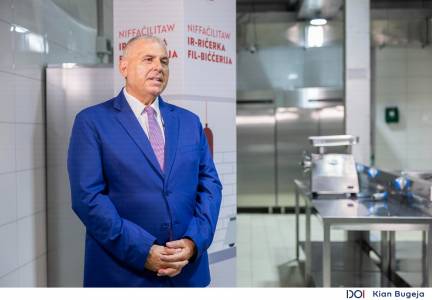
The Minister for Agriculture, Fisheries and Food Supply, Anton Refalo, inaugurated a new experimental kitchen facility for research and small-scale processing at the Public Abattoir.
The new facility, located in the Public Abattoir complex in Marsa, represents an investment of approximately €200,000 in research, innovation, value addition and sustainability in the livestock and meat sectors in Malta.
Minister Anton Refalo explained that this investment is part of the implementation of one of the measures of the Government’s Electoral Programme.
“This facility forms part of a broader strategy aimed at supporting farmers, processors, researchers, students, chefs and entrepreneurs in the development of new food products derived from local production,” said the Minister. “This investment builds on previous investments, including the Vertical Scalding System plant and the mazzit processing plant, which were inaugurated in recent years.”
The Director General of the Public Abattoir, Stefan Cachia, stated that this facility represents a natural evolution of the role of the Public Abattoir.
“The Public Abattoir is no longer simply a place where animals are slaughtered. Over the past few years, it has evolved into a center for research, innovation, education, training and product development. The inauguration of this facility further strengthens our ability to support the local livestock sector, create higher value products, reduce waste and generate new economic opportunities,” said Stefan Cachia.
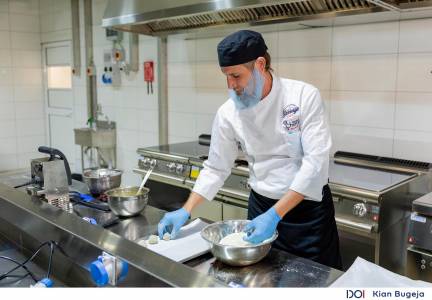
The facility has been designed to provide a fully equipped environment where innovative meat products can be researched, tested, developed and produced on a pilot scale before being commercialised. The need for this plant emerged from discussions with local meat processors, who explained that they normally have to travel abroad to test new product ideas, at considerable expense.
The facility will also serve as a dedicated platform for collaboration between Government, academia and industry. Researchers, food technologists, educational institutions and private operators will be able to carry out product development, research projects and pilot production without the need for substantial initial capital investment in infrastructure.
This will facilitate the creation of new enterprises and products for niche markets, while reducing barriers to innovation in the local meat industry.