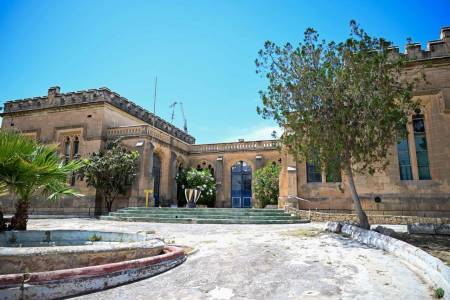
A Grade 1 Neo-Gothic building is to be restored and, for the first time in its history, opened to the public, complemented by a new garden designed with respect for its historical heritage.
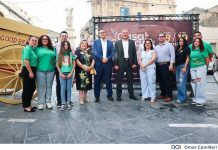
This was announced by Minister Miriam Dalli and Minister Byron Camilleri during a presentation of the plans for the rehabilitation of the pumping station in Gżira, with an investment of €10 million. The pumping station is a scheduled monument and an important pillar of Malta’s water infrastructure, dating back to the late nineteenth century.

The project will reopen the site’s doors, which have been closed for more than a century, and transform the surrounding land into a public garden.
“This will be a garden for everyday life, a place where children can play, where elderly residents can enjoy the shade, where the community can organise activities without having to leave its own locality. And it is being carried out, deliberately, with attention to the pumping station itself. This is certainly not an isolated project; the Corporation alone has a number of operational buildings, many of them historically important, spread across Malta. For decades, there has been the impression that historical heritage and modern infrastructure are in conflict. What you are seeing today is proof that this way of thinking is wrong. This is the model we want to continue implementing in our projects,” said Minister Miriam Dalli.
“It is very encouraging to see projects of this kind being carried out across the country, and I am very proud that today we are here together, as a team, to ensure that this project, being led by the Water Services Corporation in the heart of the island, becomes a reality in the near future. This is an area with its own particular needs. Even in my role as Minister for Home Affairs, we have always looked at ways to help address these needs. However, my role as Minister also responsible for Community Malta also involves me in discussions on implementing beneficial projects with a range of objectives, social, cultural and environmental, among others. I can confidently say that this project fulfills these various aims,” Minister Byron Camilleri said.
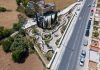
The new garden will be the most visible element and will be open to the public. Extensive landscaping will be carried out around the station, including shaded seating areas and smaller spaces for gathering. The works will be carried out to better showcase the main façades. Local drought-resistant plants will be used, together with low-impact paving and a lighting system, as well as a sustainable rainwater system, new entrances, one from Luqa Briffa Street and another from D’Argens Street, will reconnect this land with the rest of the locality, removing a wall that has cut the site off from the community for more than a century. The garden will serve both everyday recreation and community activities, as well as educational visits.
Karl Cilia, Chief Executive Officer of the Water Services Corporation, said that the project marks one of the most important heritage intervention initiatives ever carried out within Malta’s water infrastructure, and the first to also deliver a new public garden as part of the same project. “The Gżira pumping station served this country for more than a century, and our aim is for it to continue doing so for the next century. We are restoring the building to its original glory, improving the systems that keep it running so that it operates more efficiently and with less noise than ever before, and, for the first time in its history, opening its grounds to the public as a new garden. It is rare for a project to deliver benefits for heritage, the environment, operations and public space all at once. This project does precisely that.
The design of this project was first developed internally by the Water Services Corporation and is now being taken forward in collaboration with AP Valletta, the award-winning Maltese studio specialising in sustainable heritage, which is responsible for the project’s detailed design and architectural execution.
The site also includes a reinforced concrete water tower, one of the few early water tanks of its kind still existing in Malta. After years of limited maintenance and deterioration, WSC chose to retain and restore the tower rather than remove it. Its restoration is being led by the Faculty for the Built Environment at the University of Malta, headed by Professor Ruben Paul Borg, an internationally recognised authority in concrete heritage and technology.
Beyond this work, the building will also be given a new civic role. Once the works are completed, the pumping station will host the Gżira Local Council.
Full information about the project, including renders, plans, the building’s history, and ongoing updates as the works progress, can be found on the dedicated project page at wsc.com.mt/gzira-ps.