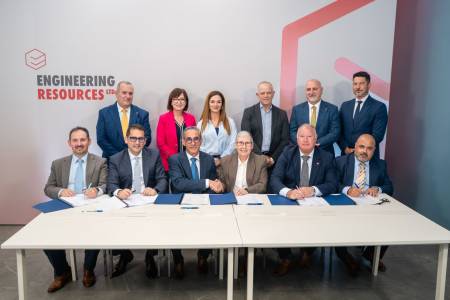
A new collective agreement has been signed for workers at Engineering Resources Limited, ERL, following a negotiation process that has been ongoing for the past twelve months.
Around 800 workers to benefit
The agreement, which covers the period between 2025 and 2030, will lead to substantial improvements in the working conditions of around 800 ERL workers who provide services to Enemalta and to the International Energy Service Centre, IESC, a subsidiary of Enemalta.
The agreement includes improvements in basic pay, improved overtime rates, improved allowances, as well as better conditions for special family-related leave. These measures were agreed so that workers’ conditions better reflect the needs of today’s labour market and the new realities in which ERL workers are operating.
Without doubt, this is the best collective agreement ever negotiated for ERL workers.
Minister for the Environment and Energy Miriam Dalli said that this agreement is clear confirmation of the Government’s commitment to better working conditions, fairer wages, and proper recognition of workers’ skills. “This collective agreement is a very important step for ERL workers and their families. After a year of serious and constructive negotiations, today we are delivering a concrete result that recognises the contribution, experience, and dedication of these workers. ERL workers have been and remain an essential part of Enemalta’s operations and of energy-related services in our country, but we must also recognise that many of them have, over the years, adapted to new realities, different workplaces, and new trades. This requires flexibility, commitment, and continuous training, and it was therefore appropriate for their conditions to improve significantly. In this way too, together we are continuing to strengthen the country’s resilience,” Minister Dalli said.
The Minister added that the agreement also shows how economic growth should translate into direct benefits for workers. “The improved basic pay, better overtime rates, strengthened allowances, and better family-related leave conditions are all measures showing that the worker is at the centre of our policy. We want a labour market that is competitive, but also fair; a labour market that attracts and retains skills, while at the same time giving workers dignity and stability. This agreement reflects precisely that balance. It is an investment in people, in their skills, and in the quality of service provided to the country,” Minister Dalli added.
Josef Bugeja, General Secretary of the GWU said, “These negotiations took a long time because, apart from changing the working conditions, we increased the wages, increased the allowances, and introduced new allowances for these workers, since their world of work is constantly changing. Other issues relating to wages and pensions were also resolved. This is where you can see the success of social dialogue between employers and workers, and the role of the GWU in achieving that balance between workers’ aspirations and the needs of the job.”
This collective agreement therefore not only strengthens workers’ financial and social conditions but also recognises the value of their work and their continued contribution to essential services for the country.
Photo: MEEC