In 2025, Jobsplus trained almost 6,000 people, some of whom took training more than once, as 461 courses were delivered. Almost 80% of those who took these courses successfully completed them. The majority of participants were women, 62% compared to 38% who were men.
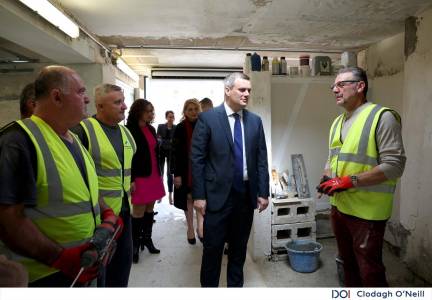
This emerged during a visit that Minister for Home Affairs, Security and Employment Byron Camilleri made to the Jobsplus Training Centre, during which he met with participants in various courses and with members of staff.
The Minister explained how skills development is a crucial element in the Malta 2050 Vision, which sets out the country’s long-term vision to build a more resilient, innovative and valuable economy, supported by a skilled workforce. The third pillar of the Vision focuses on future skills and specifically macro measure 63 under this pillar emphasises the development of an industry-specific skills framework by also identifying ‘skills gaps’.
Jobsplus training programmes align with the Vision as they lead to new skills, new employment opportunities, support the empowerment of workers in the labour market while reducing skills mismatch rates.
Minister Byron Camilleri explained that one of the objectives of the Malta Labour Migration Policy is what is called “a skills-based approach”, a policy that recognises and rewards employers who invest in their employees through training and professional development.
“We want every worker to have the chance to train, grow and have the chance to move up a step in their lives. This while strengthening stability in the labour market. This is because employers invest in initiatives that increase production, with trained workers the country will be more productive, workers will be of higher quality and this will lead to creating more stability because employers are more afraid of the investment that is made in training where they emphasize quality and not numbers. Therefore, here too we incentivize and reward those who choose this path,” said Minister Camilleri.
In fact, Jobsplus promotes and facilitates this training, as while offering courses according to what is requested by employers, it also offers 140 training courses, both accredited and non-accredited, which are accessible to job seekers, employees and employers.
The latest courses focus in particular on digital skills, sustainability skills and the care sector, in line with national and European priorities. 23 new courses were also introduced in 2025, in areas such as agriculture, business skills, care, child education, construction as well as occupational health and safety.
Jobsplus CEO Celia Falzon said that investing in skills is an investment in Malta’s future. Through its training programmes and employment schemes, Jobsplus is investing in people’s potential by equipping them with the digital, technical and practical skills needed in a rapidly changing labour market. “This investment is essential to sustaining a resilient economy, strengthened by a skilled, capable and adaptable workforce.”