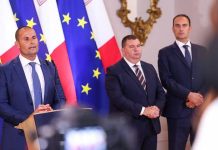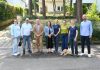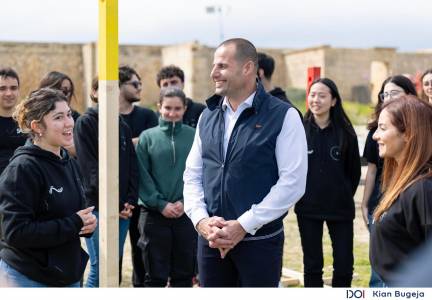
Prime Minister Robert Abela took an active part in another step of the public consultation process regarding the conversion of Fort Campbell into a national park.
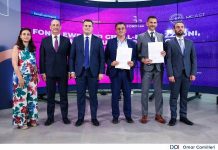
Together with Environment Minister Miriam Dalli, Dr Abela listened to the ideas of prospective architects and engineers who spent the last three days at this site between Mellieħa and Selmun working on a design of how they imagine the future of Fort Campbell as an open space for families.
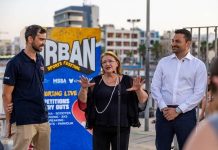
This activity, organised by the SACES (Society for Architecture and Civil Engineering Students) organisation in collaboration with Project Green, served as a practical workshop for students to discuss their thoughts for this place and reflect them in a structure designed with different materials, including those found in the fort itself.
The students had the opportunity to explain to the Prime Minister and Dr Dalli the potential they see in the Government’s commitment to create a national park around Fort Campbell based on people’s ideas.
Prime Minister Robert Abela said that the country can now afford to, instead of giving land like this in Mellieħa for more profitable projects, make the choice in favour of investing in open spaces for families. He said that the same will be done in White Rocks where the first phase of clean-up has already begun and in Manoel Island where discussions are at an advanced stage for the Government to take back the site. “We gave our word that these lands would be given back to the families for their enjoyment, and that is what will happen. With us, people not only know where they are, but they know where we are going as a country.”
Minister Miriam Dalli stressed the importance of public participation in the consultation process on these three National Parks. “Today we are witnessing a different kind of consultation than usual. We are meeting with SACES students, who are the architects of tomorrow, where with the help of Project Green these workshops are being held. In this way we are not only listening to their views, but we are also giving them the opportunity to contribute in a concrete way to the vision of how these open spaces can be protected, developed and passed on to future generations.”
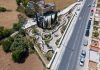
Fort Campbell was built in 1938 and was used by the British as a fortress a few years before World War II. This fortification is one of the largest and last defensive structures built by the British in Malta.
Over time, however, the fort was left derelict and abandoned. Now the Government has taken the decision to restore this historic structure and return it to the public as one of the three National Parks.
As part of the Shape Your Space campaign, one can submit their ideas about Fort Campbell on parksinmalta.mt .
Photos: DOI/OPM