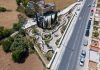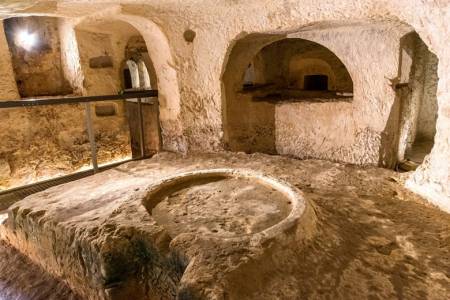
Minister for Culture, Lands and Local Government Owen Bonnici, together with Heritage Malta, announced that the site of the Catacombs of St. Paul in Rabat has been awarded the European Heritage Label, thus becoming the first Maltese site to receive this recognition.
This certificate testifies to the site’s contribution to a better understanding of the continent’s common past.
Minister Owen Bonnici said, “This recognition of the Catacombs of St. Paul not only shows how deep and significant Malta’s history is, but also how seriously and responsibly we are looking ahead. When culture is seen as a pillar of innovation and sustainable growth, we are building a future with strong roots.”
Glenn Micallef, European Commissioner for Intergenerational Justice, Youth, Culture and Sport, said, “These sites remind us that Europe’s future is rooted in its shared past. These sites are living classrooms for new generations. By preserving them, we ensure that Europe’s history continues to inspire us, unite us and guide us forward.”
Noel Zammit, Chief Executive Officer of Heritage Malta, said, “This achievement affirms the agency’s long-standing commitment to placing Malta’s heritage in its wider European context. It also reinforces Heritage Malta’s continued participation in initiatives such as the European Heritage Days and International Museum Day, while further strengthening the role of the catacombs on the Camino Maltés route and on Malta’s UNESCO Tentative List, and placing the site on the cultural map of Europe for present and future generations.”
A flagship initiative of the European Commission’s ‘Creative Europe’ framework, the European Heritage Label recognises sites that have been crucial in shaping Europe’s history, culture and development. This year saw the largest number of sites receiving this recognition since 2014, with 13 sites selected by independent experts for their historical significance and commitment to engaging and inspiring young people.
In March last year, the Catacombs of St. Paul were selected from among the proposals received by the Commission from 15 EU countries. The site has now earned its place among the sites that convey key elements of Europe’s shared human history.
The catacombs served as a cemetery in Punic, Roman and Byzantine times, and are the largest burial site of the classical period in Malta.
The complex brings together Jewish, Polytheistic and Christian burials in the same cemetery, thus offering some of the oldest material evidence of religious coexistence, diversity and freedom of belief in Europe.
Other European values represented at the site through symbols, inscriptions and unique features include equality, human dignity, free trade and scientific knowledge. The site also bears witness to the Christianisation of Europe and the beginning of traditions associated with it.
As part of the process leading to the award of the certificate, Heritage Malta submitted a project aimed at making the catacombs an even more interesting historical and educational destination, and to more effectively convey their European significance.
The initiative includes changes to the visitor center, updating the exhibition spaces, creating an interpretation pavilion and an excavation area for activities aimed at children and youth, and improving the audio guide by adding more European language options.
Other sites awarded the European Heritage Label this year include Provadia-Sonitsa in Bulgaria, the oldest salt production centre and the first prehistoric urban centre in Europe; the remains of the Lapedo Child in Portugal, one of the rare Palaeolithic child graves in Europe; and the Styrian Armoury in Austria, the largest preserved historical armoury in the world.
Photo (MCLG)