


The Ministry for Equality and Civil Rights and the Commission on Gender-Based Violence and Domestic Violence, together with the Ministry for Social Policy and the Family and Dr Lydia Abela, launched the national 16-day campaign of activism against domestic violence, with the theme “Call it what it is”.
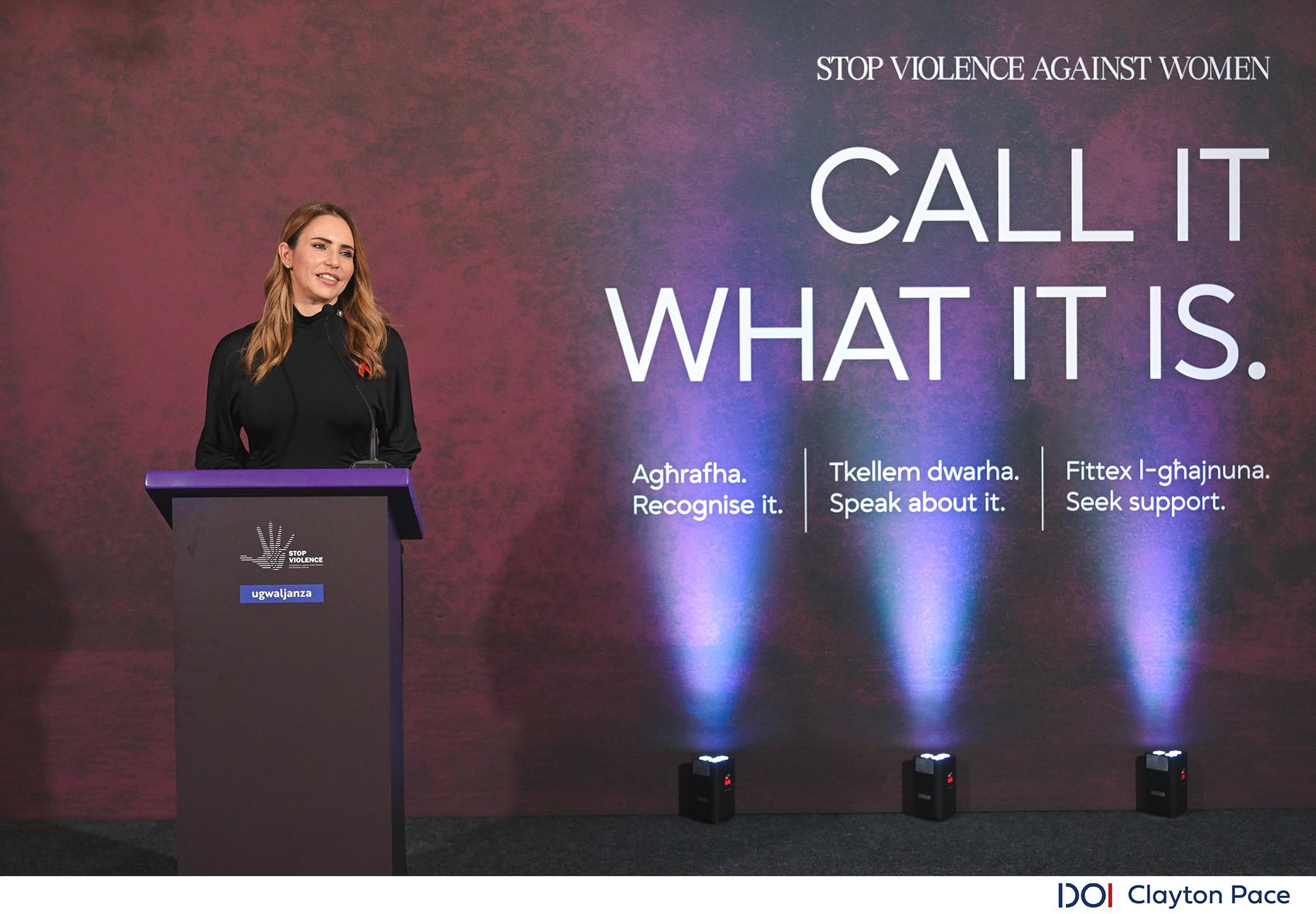
The Prime Minister’s wife, Dr Lydia Abela, stressed that behind every case of domestic violence there is a different story. In her meetings with victims, she heard accounts of suffering, fear and pain that are not always visible from outside, and of people who have carried this burden in silence for a long time. She highlighted the importance of understanding the different dimensions of domestic violence, recognising victims’ realities and offering support.
“There is no single story of domestic violence. Every victim has their own story, their own realities and their own struggle. Instead of judging them, let us offer them a shoulder, and instead of turning our backs, let us choose to listen, understand and help,” stressed Dr Lydia Abela.
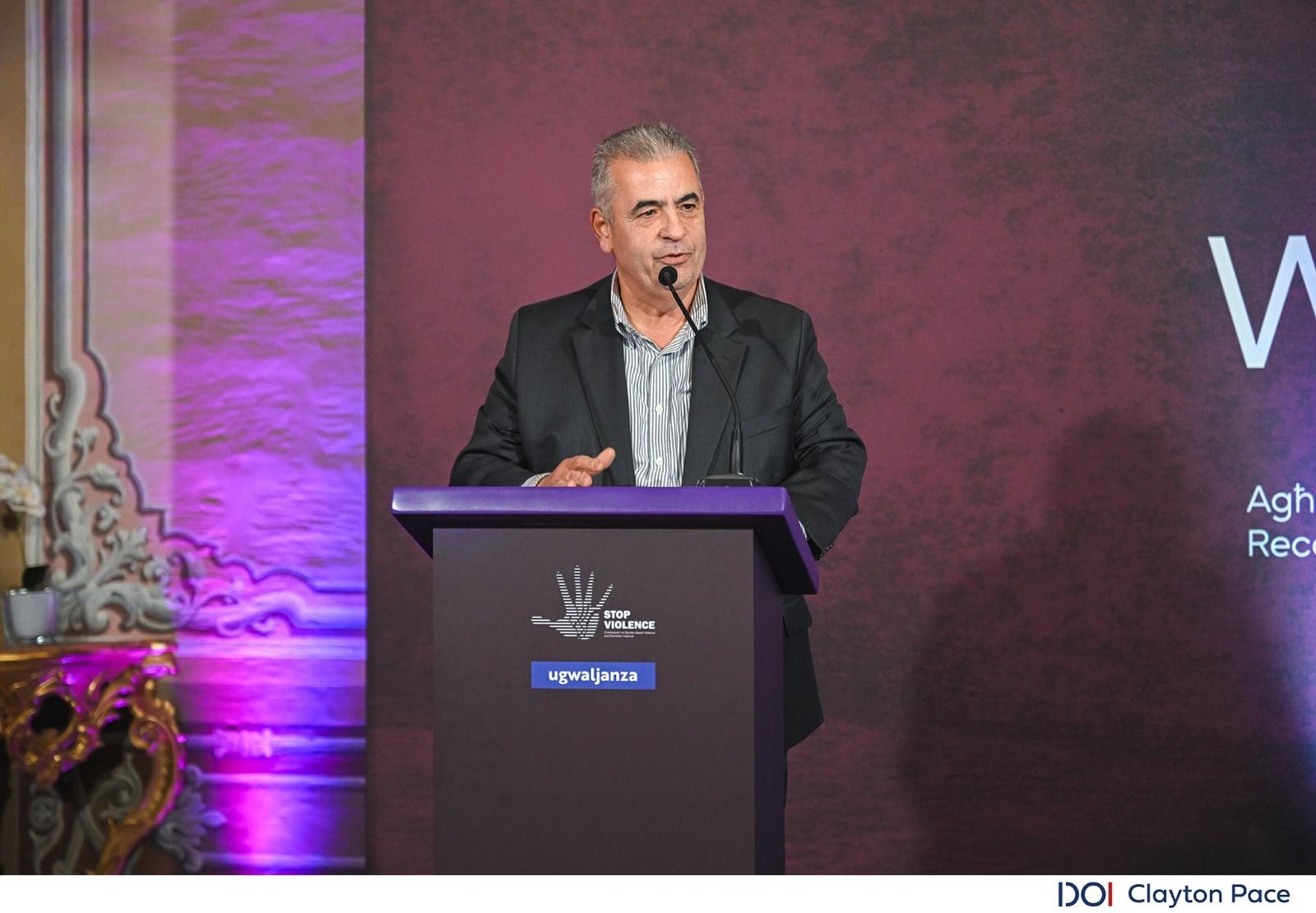
Minister for Social Policy and the Family Michael Falzon highlighted prevention, awareness, access to justice and stronger support services as essential to creating an environment where victims feel safe to seek help and no form of violence is tolerated.
“Our collective presence today testifies to how much we truly want to continue working towards a safer, more inclusive and violence-free society because violence does not discriminate and protection, justice and dignity must be guaranteed for all,” stated Minister Michael Falzon.
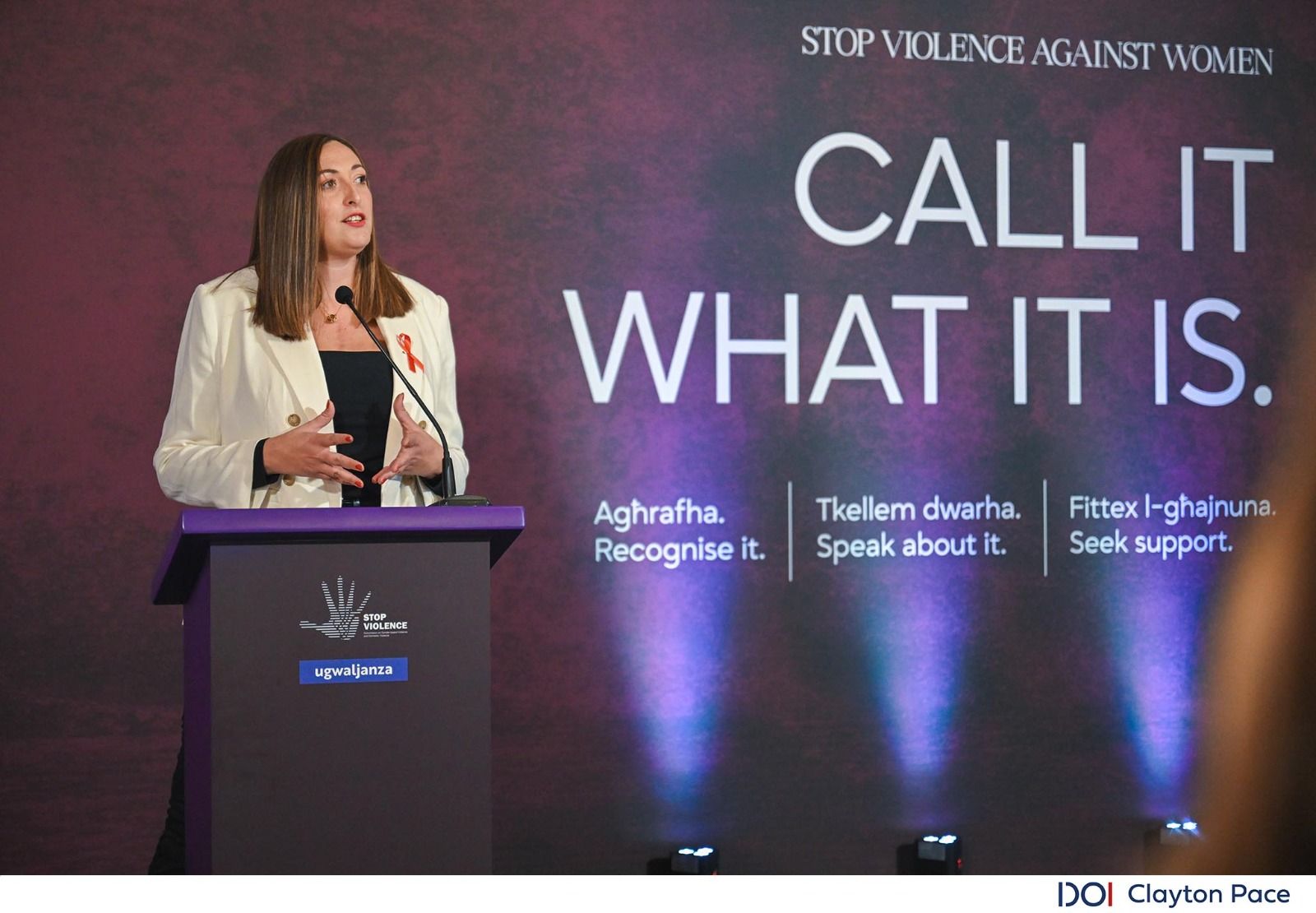
The campaign highlights the roots of gender-based violence, which begin long before violence becomes more apparent. Minister for Equality and Civil Rights Rosianne Cutajar explained that its main aim is to raise awareness of harmful gender stereotypes, sexism and gender inequalities.
She stressed that these phenomena create an environment where abusive behaviour or attitudes are normalised, minimised or interpreted as expressions of love and affection, when they may be manifestations of sexism, harassment, control, manipulation or other abuse.
Commissioner for Gender-Based Violence and Domestic Violence Samantha Pace Gasan said the campaign aims to ensure such behaviour is recognised early, not excused or minimised, and called what it is: violence and abuse. A series of initiatives will address different forms and aspects of gender-based violence and domestic violence.
The initiatives target non-governmental organisations, government entities and the public, with increasing priority given to prevention.
The annual campaign reinforces the call for collective action during the 16 Days of Activism, from 25 November, the International Day for the Elimination of Violence against Women, to 10 December, Human Rights Day.
Photos: DOI/MER/MSF. Photography: Clayton Pace.