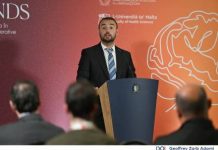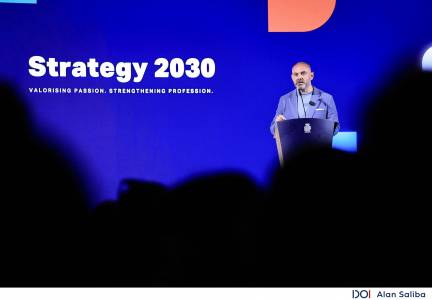
The Arts Council Malta’s 2030 Strategy was officially launched during an event attended by cultural stakeholders, practitioners, artists and representatives from Malta’s cultural and creative sectors.
The new strategy sets out the direction of the Arts Council Malta for the coming years and has been designed to address, through a practical and structured framework, the realities that the cultural and creative sectors are currently facing.
Minister for Culture, Arts and Local Government Owen Bonnici said: “The 2030 Strategy reflects this Government’s commitment to placing culture and the arts at the centre of Malta’s long-term development. Culture forms an integral part of national progress. Through this strategy we are strengthening the conditions that allow artists, organisations and creative communities to grow with confidence, plan ahead, and build work that is sustainable over time. At the same time, we recognise that culture is a living sector, shaped by new technologies, changing audiences, and evolving forms of expression. The role of Government is not to control creativity, but to provide the stability, trust and direction that allow it to flourish. In this way, we are investing in a sector that supports education, drives innovation, strengthens communities and contributes for the broader development of our country in line with the Malta 2050 Vision.”
Dr Luke Dalli, Executive Chairman of the Arts Council Malta said, “Strategy 2030 is not just a document, but a decisive step towards a stronger, sustainable and inclusive cultural ecosystem, built on the right to culture, professional development and internationalisation. It recognises that art is not decoration, but a central pillar that shapes the identity, well-being and economy of our country, and that creativity should be accessible to all. Above all, it is a collective invitation to build together a future where culture truly belongs to everyone, a sector that embraces its potential, grows with a clear vision, and places Malta confidently on the international stage.”
Daniel Azzopardi, Director of Strategy at Arts Council Malta, said: “Strategy 2030 is built on the understanding that a strong cultural sector requires more than good will. It needs the right conditions to thrive: fair practices, long-term planning, meaningful access, and clear opportunities for development. Every day we see how much artistic life is sustained by passion, commitment, and community. Therefore, Strategy 2030 is designed to help create a more sustainable environment in which artists and organisations can move towards long-term professional development, while continuing to strengthen the link between local cultural life, cultural rights, and international exchange.”
Profs Valerie Visanich, co-author of the 2030 Strategy said, “The 2030 Strategy is not just an action plan, but a living framework built on active listening, ongoing research and co-creation with the sector—a strategy that recognises culture as a complex social ecosystem, and that dynamically adapts to reflect and support the realities, challenges and potential of artists and communities.”
The 2030 Strategy is built on three pillars: professional development, cultural rights and internationalisation. It is also based on five core principles that include inclusion and diversity, democratic representation, and well-being as essential conditions for a sustainable cultural ecosystem that thrives beyond our shores.
The strategy is also divided into 55 action points that will guide its implementation. These actions will be supported by detailed roadmaps, monitoring structures, and regular public reporting, with the aim of ensuring transparency while continuous evaluation takes place.
The full document can be downloaded from https://artscouncilmalta.gov.mt .