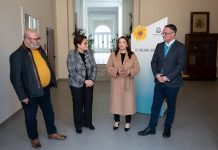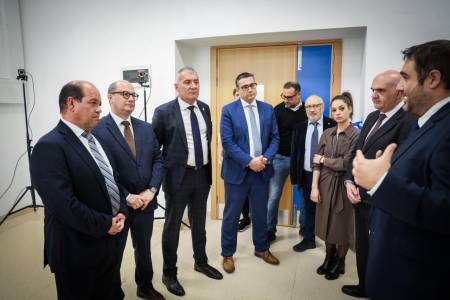
The VERA project has been launched, an initiative funded by the European Union through the Interreg Italia-Malta Programme, which will strengthen collaboration between Malta and Sicily to address common challenges, particularly those related to an ageing population and neurodegenerative diseases such as Alzheimer’s.
The VERA Project aims to develop innovative, non-invasive tools to identify Alzheimer’s disease in its early stages, before serious cognitive impairment occurs. This is being done through the use of advanced technologies such as Artificial Intelligence, Virtual Reality and wearable sensors, which measure subtle changes in body movement.
Minister for Health and Active Ageing Jo Etienne Abela said that dementia has a significant impact not only on patients but also on their families, who often bear a substantial part of the costs and responsibility of care. He reiterated that therefore, in this context, prevention and early diagnosis are crucial to ensuring the sustainability of the health system. “The VERA Project has the potential to significantly improve the quality of life of older people and their carers, by allowing for earlier and more effective intervention,” said Dr Abela.
The Minister for European Funds and the Implementation of the Electoral Programme, Stefan Zrinzo Azzopardi, stated that this project demonstrates in a concrete way how European funds are being invested in innovative solutions that make a real difference in people’s lives. He explained that through the collaboration between Malta and Sicily, both research and the development of new technologies in the health sector are being strengthened, leading to a better understanding of conditions and more effective and personalised care for patients. He added that such initiatives also contribute to strengthening health systems and supporting professionals in their daily work.
The Parliamentary Secretary for Active Ageing, Malcolm Paul Agius Galea, stated that this project represents an important step forward in the use of innovation and technology to improve the quality of life of the elderly. “Through artificial intelligence and advanced sensors, we are continuing to strengthen the early diagnosis of Alzheimer’s disease and provide more effective and personalized care. This collaboration between Malta and Italy clearly demonstrates how joint work and investment in research are essential in order to continue moving forward and address the challenges of the future, particularly in a sensitive area such as active aging,” said Parliamentary Secretary Agius Galea.
The project involves collaboration between the Ministry of Health, the University of Malta, the University of Kore (Enna), the CNR Parma and the University of Palermo. An important phase of data collection is currently underway, which will be led by the University of Malta.
Photo: MHA/MFI