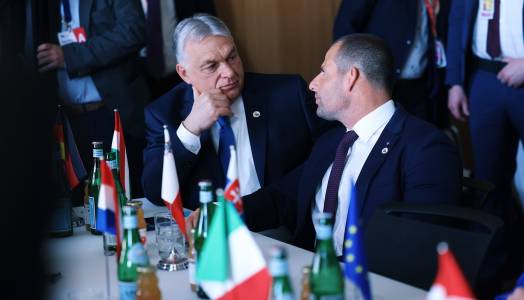
Around the table of discussions with European leaders, Prime Minister Robert Abela stressed that the European Union must take timely action to overcome inflation, particularly in the energy sector, against the backdrop of the challenges presented by the sensitive geopolitical context with tensions in the Middle East.
During the meeting, the Prime Minister said that the consolidation of the Single Market must translate into a real positive impact that is felt by citizens and businesses in all Member States, including those in peripheral and unconnected countries like Malta. He explained how this also applies to energy prices, which in a country like Malta have a much wider impact due to increases in costs related to transport and logistics.
“We must support our families and businesses with measures that protect them from the impact of inflation, and therefore we must find ways to offer stability and withstand external shocks. We have a choice before us – either we raise prices and create more burdens and fragmentation in the Single Market, or we absorb the pressures and protect our competitiveness. Our country will continue to offer stability to families and businesses as we have done since the beginning of the energy crisis in 2022,” the Prime Minister said.
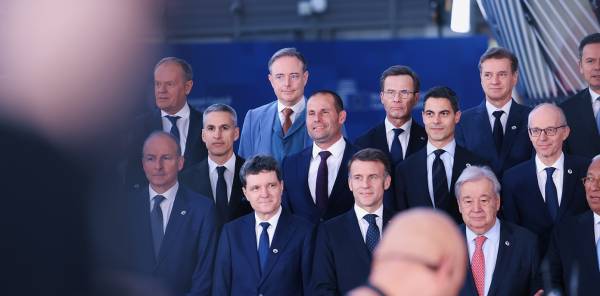
Robert Abela also referred to the letter he sent to the President of the European Commission together with the leaders of Italy, Spain, Greece and Cyprus, regarding the sanctioned Russian tanker, Arctic Metagaz. He stressed that while the Maltese Authorities were closely following the developments surrounding this case and were prepared with a contingency plan, it is necessary to find an effective European solution to these European crises that are bringing with them risks to maritime security and ecological damage in the Mediterranean. Also central to this summit were discussions on the latest developments in Ukraine and the Middle East, with the Maltese Prime Minister saying that in the latter, there is a need for the European Union to make serious diplomatic efforts in favour of de-escalation, coordination and strong dialogue in order to end the conflict.
The leaders also had an exchange with the Secretary-General of the United Nations António Guterres, where the Prime Minister stressed respect for international law and maintained that in this context, the need to strengthen multilateralism stands out more and more, with the United Nations remaining at the centre of the international system.
The Prime Minister also participated in the Euro Summit which prominently addressed inflationary pressures, where Dr Abela explained how the impact is disproportionate on countries like Malta which have an open and import-dependent economy. He argued that in the immediate term proportionate and responsible measures must be taken to support the economy, while the long-term goals of structural reforms, access to financing for companies and investment in the ecological and digital transition must remain sustained.
In a separate discussion, the leaders also discussed the Multiannual Financial Framework 2028–2034, where an account was given of the progress achieved and they discussed the next steps with the aim of reaching an agreement on a fair compromise by the end of the year. Ahead of the European Council Summit, Prime Minister Robert Abela also participated in an informal meeting on the topic of migration with a number of other European countries, where the importance of effective returns was reiterated. During this discussion, the Prime Minister reflected on the wider and long-term impacts on the European continent of the conflict in the Middle East, including the serious risk of migratory pressures, and said that the European Union must be prepared for this eventuality, primarily through increased work with countries of departure and transit.
Photos: OPM