KEY HIGHLIGHTS
- Manufacturing is now underway for the 250MVA Auto-Transformer and Shunt Reactors, signaling a major shift from design to delivery.
- The €20.2 million contract is being executed by AG Installations in partnership with global manufacturer BEST.
Production is now underway on the critical high-voltage components for the Second Electrical Malta–Sicily Interconnector (IC2), marking a definitive step forward in this project of strategic national importance.
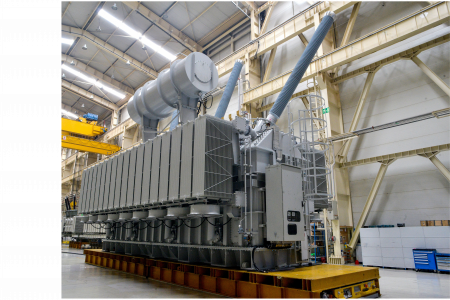
The supplies tender for the Design, Supply, and Installation of a 245kV 1x250MVA Auto-Transformer, alongside 1x120MVAr and 1x240MVAr Variable Shunt Reactors, has now commenced at the BEST manufacturing plant in Turkey. This transition ensures that the essential assets required for the successful operation of the second interconnector remain on track for delivery.
The €20.2 million contract is being delivered by the local contractor AG Installations, working in close collaboration with their supplier, BEST.
“We’re pushing forward with the implementation of our energy strategy, delivering projects that matter. We’re making significant investments in our distribution infrastructure, accelerating renewable energy growth, leading the way on battery storage, and progressing on the development of the second interconnector. Together, these initiatives will strengthen our energy security and transform our energy mix by unlocking more renewable energy opportunities.” Minister Dr. Miriam Dalli said.
Inġ. Ismail D’Amato, Chief Executive Officer of Interconnect Malta, emphasized the significance of this phase: “The commencement of manufacturing of the reactors and transformer marks an important milestone in the implementation of IC2. These components are not merely infrastructure; they are the pillars that ensure grid stability and voltage control, without which energy cannot be transmitted through the interconnector. Through its supervision, Interconnect Malta is supporting the delivery of a strategic asset designed to achieve high levels of reliability for the national network. ”
These specific components, namely, the auto transformer and variable shunt reactors, are required for voltage regulation and reactive power control. Their integration is essential
for maintaining the overall stability of the national grid and ensuring the safe, efficient transfer of electricity between Malta and Sicily.
The Second Interconnector serves as a cornerstone of the Government’s energy strategy, designed to double Malta’s interconnection capacity and significantly enhance security of supply.
By reducing reliance on local fossil-fuel generation and facilitating the integration of large-scale renewable energy, IC2 is pivotal to the nation’s green transition. This strategic investment is co-financed by the European Union under the European Regional Development Fund (ERDF), reflecting a shared commitment to strengthening Malta’s energy resilience and sustainability within the European market.
Information about IC2 an EU Funded Project
The project consists of a new ~122km long 225MW HVAC electrical cable interconnection through a 245kV submarine cable between Malta (Maghtab) and Sicily (Ragusa) to be laid in parallel but at a safe distance to the existing HVAC cable link which was commissioned in 2015.
This €300 million project was approved for ERDF funding, specifically under Priority 2, ‘Promoting clean and fair energy transition, sustainable wastewater management, and green investment’, and Specific Objective 2.3, ‘Developing smart energy systems, grids, and storage outside the TEN-E network’.
The second interconnector will not only increase the security of the electrical supply but will also lead to increased investment in renewable energy, which will help Malta better handle the intermittent nature of green sources like offshore wind and solar. Once completed, the 245kV submarine cable will double Malta’s connectivity to the European energy grid. According to the project’s cost-benefit analysis, 13.5 million tonnes of CO2 emissions will be reduced, enhancing its significance in Malta’s long-term decarbonisation strategy.
This project has been designated as an ‘Operation of Strategic Importance’ due to its significant contribution to the achievement of national priorities for the 2021-2027 Programme. The ERDF funding allocated to the project amounts to €165 million and will cover more than half of the total investment costs estimated at approximately €300m.
More information can be found at: https://icm.mt/projects/