An area that had been earmarked for development and is located within a developable zone in Siġġiewi is being transformed into an open space that will serve as a reading garden for the community.
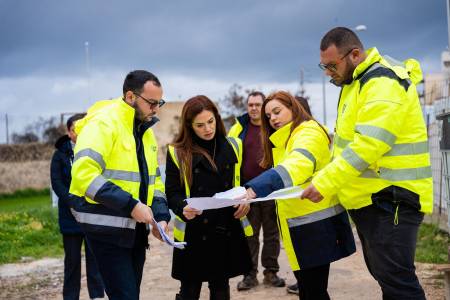
Minister for the Environment, Energy and Public Cleanliness Miriam Dalli, together with the Project Green team and Siġġiewi mayor Julian Borg, visited the ongoing works at Dun Nicholas Cachia Garden.
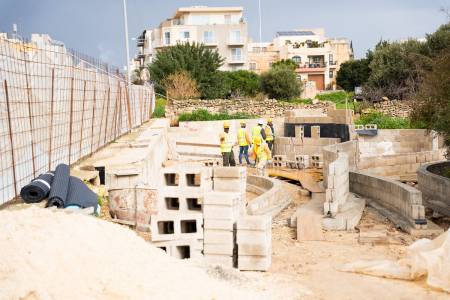
Currently, structural works are underway on the pathways of this garden, which covers around 1,000 square metres, and excavation works have also been carried out on a reservoir that will supply water for irrigating the garden.
“This is a garden we are developing in collaboration with the Siġġiewi Local Council, where we identified a space in a development zone and decided that instead of developing it, we would create a family garden with an innovative and different concept, as it will be enclosed as a reading garden — a place where people can come to relax and focus on something beautiful like reading. On our side, we are working on a number of projects ranging from parks to urban open spaces. In the coming months, we will continue at the same pace so that more communities can benefit from open spaces,” said Minister Miriam Dalli.
The garden has been named after a priest from Siġġiewi who played an active role in the locality, working tirelessly to modernise the Church’s means of communication so that the message could reach Maltese and Gozitan families in a more effective and contemporary way. In 2025, Fr Nicholas continued his pastoral work in Florida, USA.
The project’s manager, David Ellul, explained that the soil already present on site will be reused for this project. “Dun Nicholas Cachia Garden is another project we are working on as an agency. The sustainability elements include reusing soil found on site, as well as ensuring that we include indigenous plants that are suited to Malta’s climate,” said Ellul.
Photos: MEEC