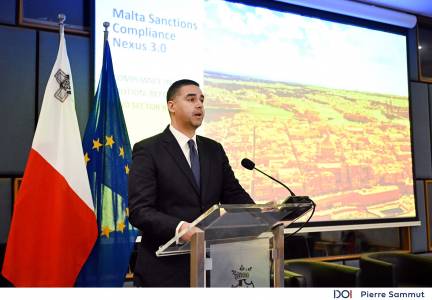
“Malta and other coastal states share a common interest in ensuring that international sanctions are implemented effectively and consistently, particularly in addressing the risks posed by Russia’s so called shadow fleet.”
Deputy Prime Minister and Minister for Foreign Affairs and Tourism, Ian Borg, stressed the importance of robust enforcement against deceptive maritime practices, including the shadow fleet, when he was opening the Malta Sanctions Monitoring Board Annual Conference in Valletta, on Monday morning. This enforcement, he explained, requires coordinated, lawful, and targeted measures to prevent sanctions circumvention, while upholding international maritime law and safeguarding legitimate trade.
Dr Borg underscored Malta’s commitment, as an EU and UN Member State and a responsible maritime jurisdiction, to strengthening oversight, compliance, and cooperation in line with international and European sanctions frameworks.
Evolving regulatory demands and geopolitical developments are reshaping the global sanctions landscape, placing increased responsibilities on Malta not only as an EU and UN Member State, but also as a maritime jurisdiction, and as a trusted participant in the international financial system. “Russia’s continued aggression against Ukraine remains a grave threat to European security, prompting successive EU sanctions packages designed to deny access to dual-use and military-relevant technologies,” he added.
In this regard, Malta continued to step up its efforts, with increased monitoring of vessel histories, cargo, beneficial ownership, and AIS compliance, subjecting high-risk patterns and jurisdictions to intensified scrutiny. Malta also continued to demonstrate its leadership with the establishment of the Global Centre for Maritime Sanctions Monitoring in Valletta, which has become an essential platform for coordinated action to dismantle the business model sustaining the shadow fleet.
The Deputy Prime Minister commended the Sanctions Monitoring Board for strengthening its engagement with the relevant authorities and private stakeholders, providing more operational guidance towards consistent implementation. This effort was also supported by the legislative enhancements adopted by Parliament in 2025, ensuring that Malta’s sanctions framework remains robust and enforceable.
He also emphasised the crucial role of the private sector. “From financial institutions and corporate service providers to maritime, aviation, gaming, and fintech operators, your daily decisions directly protect Malta’s national security and international reputation. Our credibility and resilience depend on our collective commitment to act decisively and responsibly in an increasingly unstable world,” he concluded.
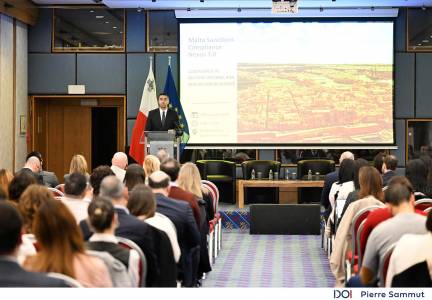
More than 250 stakeholders participated in this year’s Sanctions Monitoring Board Conference, bringing together public authorities, the private sector and international experts, under the theme The Malta Sanctions Compliance Nexus 3.0: Compliance in Motion, Reform, Risk and Sector Resilience.
Photos (DOI/ODPM-MFT)