A long-neglected land, formerly an oil depot in Birgu is being transformed into a 1,500-square-metre public garden designed to serve as a green, climate-sensitive community space along the Kalkara Creek promenade.
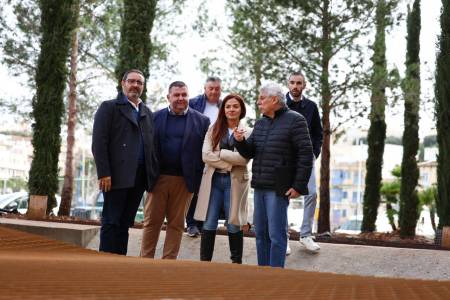
The details of the project were discussed during a visit to the ongoing works on site by Minister for the Environment, Energy and Public Cleanliness Miriam Dalli, Parliamentary Secretary for Public Cleanliness Glenn Bedingfield, the Grand Harbour Regeneration Corporation (GHRC) CEO Gino Cauchi, as well as members of the Birgu Local Council, including Mayor John Boxall.
“It is important that we continue to restore derelict spaces in a way that serve present needs while safeguarding future resilience. This area had remained vacant for over a decade, and it is now being revitalized and transformed into a beautiful garden. This is another project that shows how neglected sites can be reimagined into green spaces that strengthen our communities and our environment. While creating this garden we are also giving this historic area a new purpose; one that prioritises sustainability, public wellbeing, and the natural character of the Grand Harbour. By integrating climate-conscious design, increasing tree cover, and ensuring responsible water management, we are demonstrating how regeneration can honour our heritage and our environment,” Minister Miriam Dalli said.
Parliamentary Secretary Glenn Bedingfield said that, “This garden aligns with the Kottonera strategy, which we developed together with the residents over the past years, so that this garden can be enjoyed by everyone who visits this area.”
CEO of the Grand Harbour Regeneration Corporation Gino Cauchi said that, “As a corporation, we discussed with the local council to identify the needs of the community, and the plans for this garden were drawn up. Today, we are at an advanced stage of the works. Here, we will have a garden with 40 trees, hundreds of shrubs, benches where visitors can sit, and an area where the local council will be able to organise various social activities for everyone.”
The site, once part of the Knights’ era fortifications, was reshaped under British rule when the outer hornworks were demolished to make way for a seaside oil depot. After its decommissioning and demolition by Maltese authorities in 2010, the area was capped in concrete and left empty.
Central to the new garden is a 400-square-metre oval arena that will allow residents and visitors to organise events, classes and community activities. The remaining space is being shaped into a winding garden path bordered by Mediterranean flora, with trees and plants being introduced to create a lush and welcoming environment. Seating area — including picnic tables and benches – will be clustered beneath the shade of pine trees, recognising that shade is essential for the comfort and long-term success of public open spaces in Malta’s climate.
In fact, to further address rising temperatures and water pressures, GHRC has incorporated a sustainable soil and irrigation strategy. The garden is being built with a 50-centimetre soil base covered by an eight-centimetre gravel layer, a method that reduces water loss, supports native flora and lowers maintenance needs.
Photo: MEEC