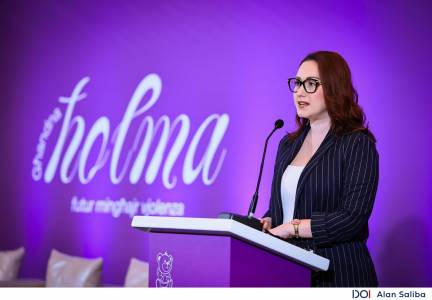
A conference that closed the sixteen days of activism against domestic violence discussed the effects of domestic violence on children amid a study that showed how the trauma of domestic violence continues to haunt children throughout their lives and can be the beginning of a vicious cycle that is passed from one generation to the next.
Parliamentary Secretary for Equality and Reforms Rebecca Buttigieg said that domestic violence in the presence of children is a crime in itself and carries aggravated penalties. “We cannot dream of a future without violence if we do not prioritize children in preventing domestic violence,” said Rebecca Buttigieg.
Parliamentary Secretary Buttigieg added that while she understands the legal complexities of separating children from parents when there are abusive relationships, it is in the supreme interest of children to distance themselves from any episode of violence.
The Parliamentary Secretary referred to research conducted among adults who experienced domestic violence in their childhood, which showed that more than 12 percent of them suffered various abuses. She said that this is why the 16 days of activism campaign focused on helping the victim, the children and the aggressor to stop the cycle of domestic violence.

Minister for Social Policy and Children’s Rights, Michael Falzon said, “It’s nice to dream, but for a dream to become a reality, you have to work for it. This is how we must continue to work to ensure that the domestic environment is a dream where one feels loved, safe and tranquil. We have done a lot in this sector, legal reforms and amendments have been introduced in recent years, but there is still room for more work to be done in order to break the cycle of domestic violence.”
In her speech, Dr Lydia Abela said that the family is the first environment where children learn what love, respect and healthy relationships are and that when this environment is broken it causes long-term consequences. She stressed that they must ensure that children are informed that domestic abuse is not normal, that victims are given the support and services needed to get out of a frightening situation, as well as that the aggressor is given help to understand his behaviour and change it.

“None of our children deserve to live in violence and abuse and we will continue to work tirelessly to prevent, intervene and address domestic violence in all its forms. The dream we spoke about during this campaign goes beyond words—we want to create a reality where every child grows up in a safe home, where parents become a source of comfort and not fear, where they find someone to help them reach their full potential, and where domestic violence is no longer a scourge that we get used to, but a challenge that with our commitment we can all overcome,” concluded Dr Lydia Abela.
Commissioner for Gender-Based Violence and Domestic Violence Samantha Pace Gasan said that although the sixteen days of activism end with this conference, the work against the scourge of domestic violence must continue throughout the year with the implementation of further measures from the strategy against domestic violence.
Several professionals participated in the conference and, among other things, discussed how support structures can be further strengthened with an emphasis on the protection of children in legal proceedings in cases of domestic violence.