The Government is introducing upgraded surveillance camera systems in Swieqi, noise monitors in Valletta, additional resources for community policing, on-the-spot fines for non-resident foreigners who break the law in Malta and stricter accommodation regulations to strengthen enforcement and support residential communities in tourism zones.
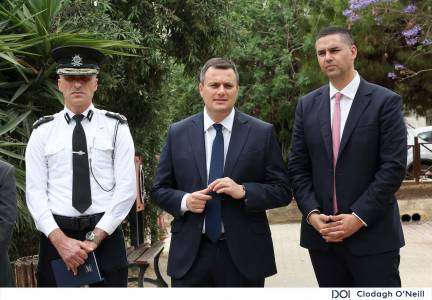
The Deputy Prime Minister and Minister for Foreign Affairs and Tourism Ian Borg, and Minister for Home Affairs, Security and Employment Byron Camilleri, announced these measures during a visit to Swieqi on Tuesday. These efforts form part of a tourism community support pilot project launched in 2025 by the Ministry for Tourism to harmonise tourism development with residents’ wellbeing, targeting local councils’ concerns on public order, the regulation of short-term rentals, and other issues.
Following discussions launched with local councils and tourism stakeholders as part of this pilot project and other initiatives, several measures will be in place ahead of summer 2026:
Swieqi surveillance system monitored by LESA: The Malta Tourism Authority (MTA) funded the upgrading and reconfiguration of Swieqi’s surveillance camera network, in collaboration with the Local Council, with new cameras in strategic locations across the locality. This 30-camera network, parts of which is now equipped with pan-tilt-zoom (PTZ) technology, will be monitored round the clock by LESA officials, through its Control Centre, as part of a wider monitoring system extending to Paceville and St Julian’s. This collaboration will ensure increased efficiency in enforcement in the area, for the benefit of residents and visitors in this tourism zone.
Valletta noise monitoring systems with automated alerts: In collaboration with the Valletta Local Council, the MTA is funding the installation of a sound pressure level monitoring system in four of the busiest streets in the city, to help Police clamp down on excessive noise levels, especially at night. The sound monitoring systems will automatically detect excessive noise and immediately send alerts to the Police. The first noise monitors will be installed in coming weeks in Republic Street, Merchants Street, Strait Street and St Paul’s Street, with plans to eventually extend the system to other streets as well. To ensure privacy, the noise monitors will not record voices or other sounds but will only detect sound levels.
New electric vehicles for community police, surveillance systems and noise monitors
New fleet for community policing: The Ministry for Foreign Affairs and Tourism is providing new electric vehicles to improve the operations of community policing, especially in localities with high levels of tourism activity. These vehicles were funded through the eco contributions paid by tourists visiting the Maltese Islands, which are jointly administered by the Tourism Ministry, the Malta Tourism Authority and the Malta Hotels and Restaurants Association.
On-the-spot fines for tourists: From 1st June, Police officers, LESA officials and officers from the Environment and Resources Authority will be able to issue on-the-spot fines to foreign nationals who do not reside in Malta, including tourists, who break the law while in the country. These fines will allow officers to collect immediate electronic payment from the individuals concerned. Introduced through new regulations by means of a legal notice by the Ministry for Home Affairs, Security and Employment, these measures aim to address the challenge of individuals who fail to pay their fines. This will not only strengthen deterrence, leading to greater order and enforcement, but will also introduce consequences for those who refuse to pay their dues.
New short-term accommodation regulations: The new Tourism Accommodation Regulations announced last month will come into effect this summer, introducing stricter conditions for short-term rental properties. Owners of these accommodations will now be required to affix a sign outside the property entrance, including the licence number and the contact number of a designated person available 24/7 to receive complaints and tackle related issues. Properties forming part of a condominium will be obliged to provide this information to the residential block administrators as well. Short-let accommodations will also need to implement an adequate waste collection management plan. Owners caught operating short-let accommodations without a valid MTA licence will be liable to a three-year disqualification, besides other penalties.
Besides these initiatives, as part of the Tourism Community Support pilot project, the Tourism Ministry is working with other ministries to continue assisting the Swieqi and Valletta local councils. Based on the results of this collaboration, the project can then be extended to other localities.
Deputy Prime Minister Ian Borg thanked the MTA, Police, LESA, local councils and other entities for working together towards lower-impact tourism activities and increased peace of mind for neighbouring communities. “As we continue guiding our tourism stakeholders towards more sustainable and higher-value tourism activities, we also want to make sure that our communities can also reap the benefits of this important industry, while contributing to a better quality of life in their localities. The measures announced today are another step in this direction. The Budget 2026 increase in eco contribution payments as from July will continue to unlock more tourism funds for similar collaborations in our communities, while investing in more authentic, higher-yielding experiences for our visitors,” Dr Borg said.
Minister Byron Camilleri said “the Malta Police Force, LESA, and the rest of the disciplined forces are today in a position to be proactive, not only in addressing crime but also in preventing it. All these projects, legal amendments, and initiatives are aimed at continuing to ensure a safe Malta, a country that today not only has the lowest crime rate, but is also the safest in the Mediterranean and one of the safest in the world. Our aim is to continue implementing these policies effectively while equipping our officials with the best tools, equipment, and resources to enable them to keep carrying out their duties effectively.”
Photo: DOI-MFT/MHA