KEY HIGHLIGHTS
• Project Progression: Interconnect Malta has moved into the Identification and
Clearance (ID&C) of the route of the Second Malta–Sicily Interconnector (IC2)
following the successful conclusion of the Detailed Marine Route Survey.
• Operational Safety: The campaign will ensure the seabed along the cable route
is free from potential unexploded ordnance (UXO) and other obstacles, allowing
the project to proceed safely to the installation phase and ensuring the cable is
laid with the highest safety standards.
• Technical Precision: Technical teams will investigate 393 specific magnetic
targets within a precise 8-metre-wide corridor, utilising specialised offshore
vessels and remotely operated vehicles (ROVs).
Interconnect Malta (ICM) has progressed into another phase of the project following the
completion of the Detailed Marine Route Survey (DMRS) for the Second Interconnector (IC2).
This transition marks the commencement of the Identification and Clearance (ID&C) campaign,
a technical operation essential to ensuring the safety and integrity of the 99km submarine cable route.
This campaign follows the completion of a detailed survey, which was undertaken to further
refine the submarine cable route between Malta and Sicily. During this survey, several magnetic
targets were identified buried under the seabed that require further investigation to confirm their
nature and ensure the route is safe for the installation of the submarine electricity cable.
A total of 707 magnetic targets were initially detected during the survey. Following desktop post-survey analysis, this number was reduced to 393 targets requiring further investigation. As a precautionary measure, the Identification and Clearance campaign will investigate these targets via specialized equipment and remove or relocate any obstacles that may pose a risk to the safe installation of the interconnector cable.
These features, located beneath the seabed, became visible only during the detailed survey
stage, when investigations were limited to a precise 8-metre-wide sub-seabed corridor.
Earlier preliminary route studies do not provide this level of resolution, as they are conducted across a much wider corridor and are not intended to identify such anomalies. While the discovery of these anomalies presented an additional technical challenge for the project, the issue was promptly addressed through the launch of the Identification and Clearance campaign to ensure that the route can be verified and prepared for safe cable installation.
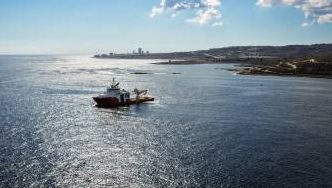
The campaign will involve specialised offshore vessels and remotely operated equipment to
inspect each identified target along the route. Where objects are confirmed not to pose a risk, they will either be recovered or safely managed on site. In the event that an object is identified as unexploded ordnance, the response will be coordinated with the relevant authorities, including the Armed Forces of Malta and the Italian authorities, to determine the appropriate course of action in accordance with established safety procedures.
The works will involve a multidisciplinary team of offshore survey specialists, divers, and
Explosive Ordnance Disposal experts, supported by specialised vessels and equipment.
Activities will vary by location and water depth, from deep‑water investigations at around
170 metres using remotely operated vehicles, to diver‑assisted inspections in shallower areas.
These operations form part of the IC2 project and are essential to confirming that the submarine cable route is safe, and compliant with international standards before cable laying begins.
Inġ. Christian Spiteri, Manager at Interconnect Malta, stated that “the transition to the ID&C phase represents a significant step in the project’s timeline”. He noted that “The Identification and Clearance campaign represents an important technical step in preparing the seabed route for the Second Interconnector. Ensuring that the route is free from potential hazards is essential for the safe installation of the submarine cable and for the protection of personnel involved in the works. This process reflects the rigorous engineering and safety standards that guide theproject as we continue progressing towards its next phase.”
“The Second Malta–Sicily Interconnector is a central element of Malta’s long‑term energy
strategy and features prominently within the ‘Energy, Climate & Environmental Transformation’ priority of Malta’s Vision 2050. Once operational, it will double the country’s interconnection capacity, strengthen security of supply, and help drive Malta’s shift toward a more sustainable and resilient energy system.” commented Miriam Dalli Minister for the Environment, Energy and Public Cleanliness on this technical milestone.
The project is co-financed by the European Union through the European Regional Development Fund (ERDF), reflecting the shared commitment of Malta and the European Union to investing in strategic infrastructure that supports energy security and the green transition.